How to Upload an Xcom Mod to the Workshop
Now that we have created a modern projection, we tin can review the components that go into a modernistic also as build, test, and publish our mod.
Mod Components
Mods for XCOM2 are equanimous of many different types of data that combine to form changes to the XCOM ii base of operations game.
-
Script Code: Script code is the most powerful type of modernistic content. In our instance weapon mod, the script lawmaking defines a information template which is the gameplay data describing how the new weapon works. How much harm does it practice? Which upgrades can information technology use? What tech level does information technology require? Does it demand to be built or is it available from the start? How much will it cost? Data templates merely scratch the surface for what can be added using script. Script code, if it overrides script that shipped with the game tin can be used to make a radically dissimilar XCOM game.
-
Unreal Content Packages: Unreal content packages tin be UPK files or MAP files. These files contain the content of the game: meshes, textures, animations, sounds, physics models, archetypes, etc. In our instance weapon mod, there is a single bundle called WP_ModExampleWeapon_CV that defines how our new weapon will await, audio, shoot, what projectiles it will use, how it will fall when dropped, etc. This packet is referenced past the script data template above. Content packages are created through UnrealEd, which will be covered later.
-
Config Files: Config files, or INIs, are used to provide settings and default values to the game. They are user-friendly to use considering changing them does non require
the game to be recompiled, and considering the UE3 config file processing system allows for private config settings to be overridden while leaving the remainder unchanged. This handy behavior can be seen in our example weapon mod where XComEditor and XComEngine, both config files with a large corporeality of settings, only adds our mod package to the lists that let the engine know our modded script package exists. In this fashion, many mods making edits to the same config files can co-exist … for the most part. -
Localization Files: Loc files are actually only config files in disguise but they have a specialized purpose: to provide all thespian facing text in the game. In our example weapon mod, English language (INT) strings are provided to fill out the friendly name and other fields the weapon needs to display correctly in the game.
- Readme.txt & ModPreview.jpg: The ModPreview image will be used to describe the modern on steam workshop, while the readme.txt can provide instructions or other data related to the mod.
Building

Output Window: Afterwards hitting Build Solution, the IDE will display build progress in the output window of the app. During the build process, Modbuddy will create the files necessary to exam and upload the mod. Part of this process is the compilation of script code. Be certain to cheque the script compilation results for success or mistake codes.

Testing
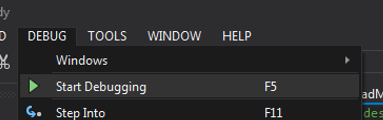
Click the Start Debugging menu selection under the DEBUG carte du jour to begin the testing process. This volition build the modern, and and so get-go the XCOM two launcher.
Select the "ExampleWeapon" modernistic and hit Play. The launcher will enumerate all mods that are subscribed or installed by the user. Local, or stand-alone mods will have their relative path in the clarification field. Hitting play will launch XCOM2 with the ExampleWeapon mod enabled.

Verify that the modernistic is operating correctly in the game. The ExampleWeapon mod adds a new weapon that is bachelor from the commencement of the game, and so to test it nosotros volition launch a single role player campaign and equip a soldier with the new weapon. Here is the script code from the template defining the backdrop we want to see on the weapon:

And the mod as running in XCOM2:

Now that nosotros have confirmed the mod operates equally intended, we are set up to publish it.
Publishing
Mods can be published through Steam Workshop or distributed equally stand-alone bundles.
Publishing to Steam Workshop


Next, use the Tools > Publish menu option available in the XCOM2 IDE. This volition launch the steam workshop UGC upload process.
Information regarding the workshop item creation and uploading process will be reported to the output window of the IDE.

Visit your user's Steam Workshop item page to view the published modernistic. Note that the first time a modern is uploaded its visibility will default to Hidden. In gild to make the modern available publicly the visibility of the mod detail will demand to exist set.

Publishing Stand-lone

To publish a stand-lone modern, locate the XCOM2 SDK base of operations directory, and the XComGame\Mods folder inside it. It will typically be independent inside a steam library or steam installation folder – an example is shown to the right.
Zip up / package the ExampleWeapon folder for redistribution.
All that is necessary to install the mod on a user's motorcar is to unpack the ExampleWeapon folder into the same XComGame\Mods location in their installation of XCOM2.
Note
This will just get you started. The more in-depth docs for each type of modernistic (Audio, Animation, etc) are downloaded with the XCOM 2 Modern Tools and should announced in the Steam binder for them on your machine. Your Windows file location should look something like this:
C:\Programme Files (x86)\Steam\SteamApps\common\XCOM ii SDK\Documentation
Source: https://steamcommunity.com/sharedfiles/filedetails/?id=956935800
0 Response to "How to Upload an Xcom Mod to the Workshop"
Enregistrer un commentaire